A practical step-by-step guide to Hajj with Qur’anic reminders, Sunnah-based order, visual timeline, checklist, duas, travel preparation, audio guidance, and offline mode.
Step 1 of 13. Shareable link: /hajj?step=1
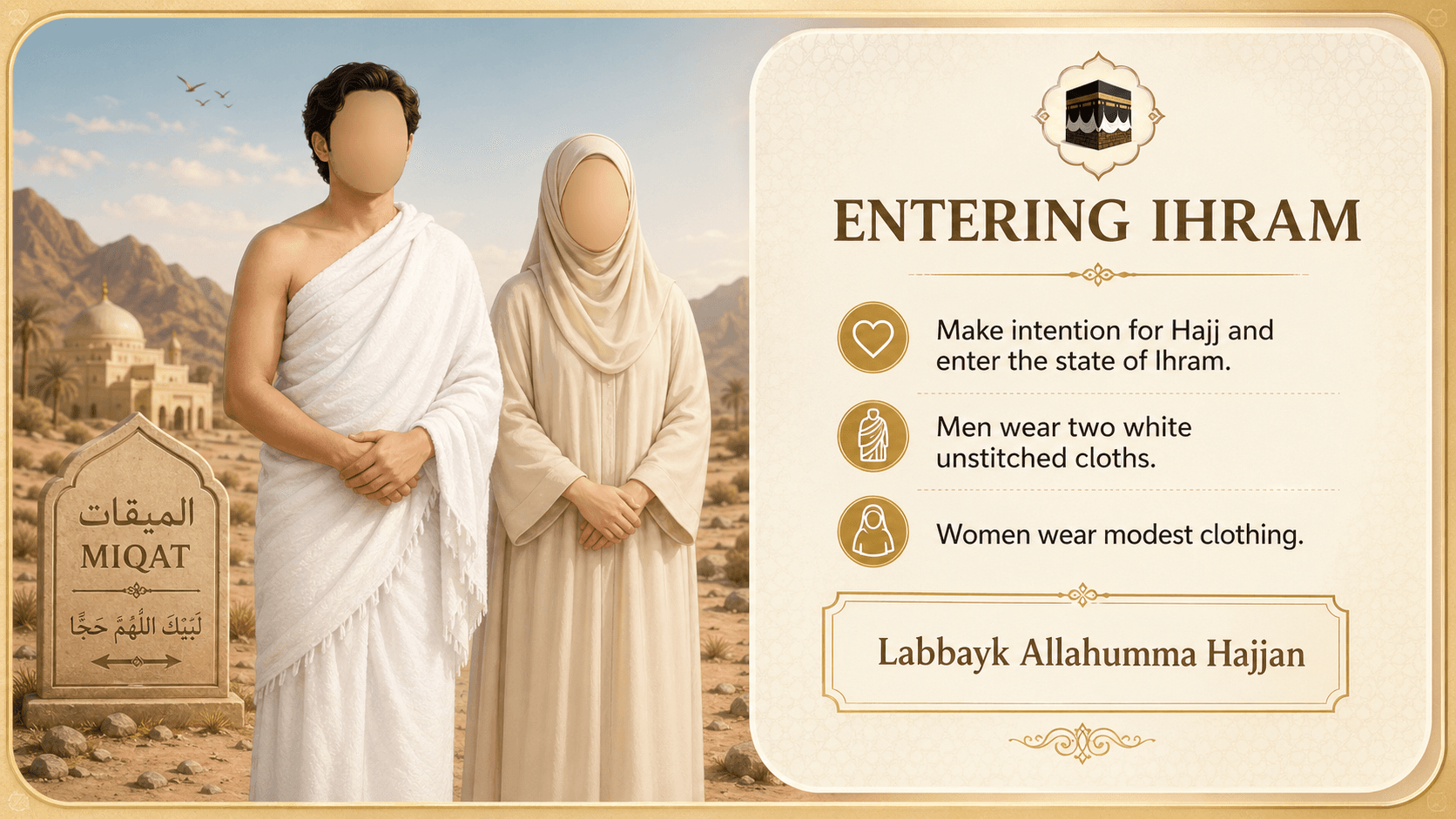
Make intention for Hajj and enter the state of Ihram. Men wear two white unstitched cloths, while women wear modest clothing.
Save the guide and images on this device so you can access them during travel when signal is weak.
Select your Hajj day and follow the key actions. This does not replace your scholar, group leader, or official Hajj instructions.
Complete Hajj and Umrah for Allah.
Hajj to the House is a duty owed to Allah by those who are able to make the journey.
Allah commanded Ibrahim عليه السلام to proclaim Hajj to mankind.
Hajj is in known months; there should be no obscenity, sin, or argument during Hajj.
Make intention for Hajj and enter the state of Ihram. Men wear two white unstitched cloths, while women wear modest clothing.
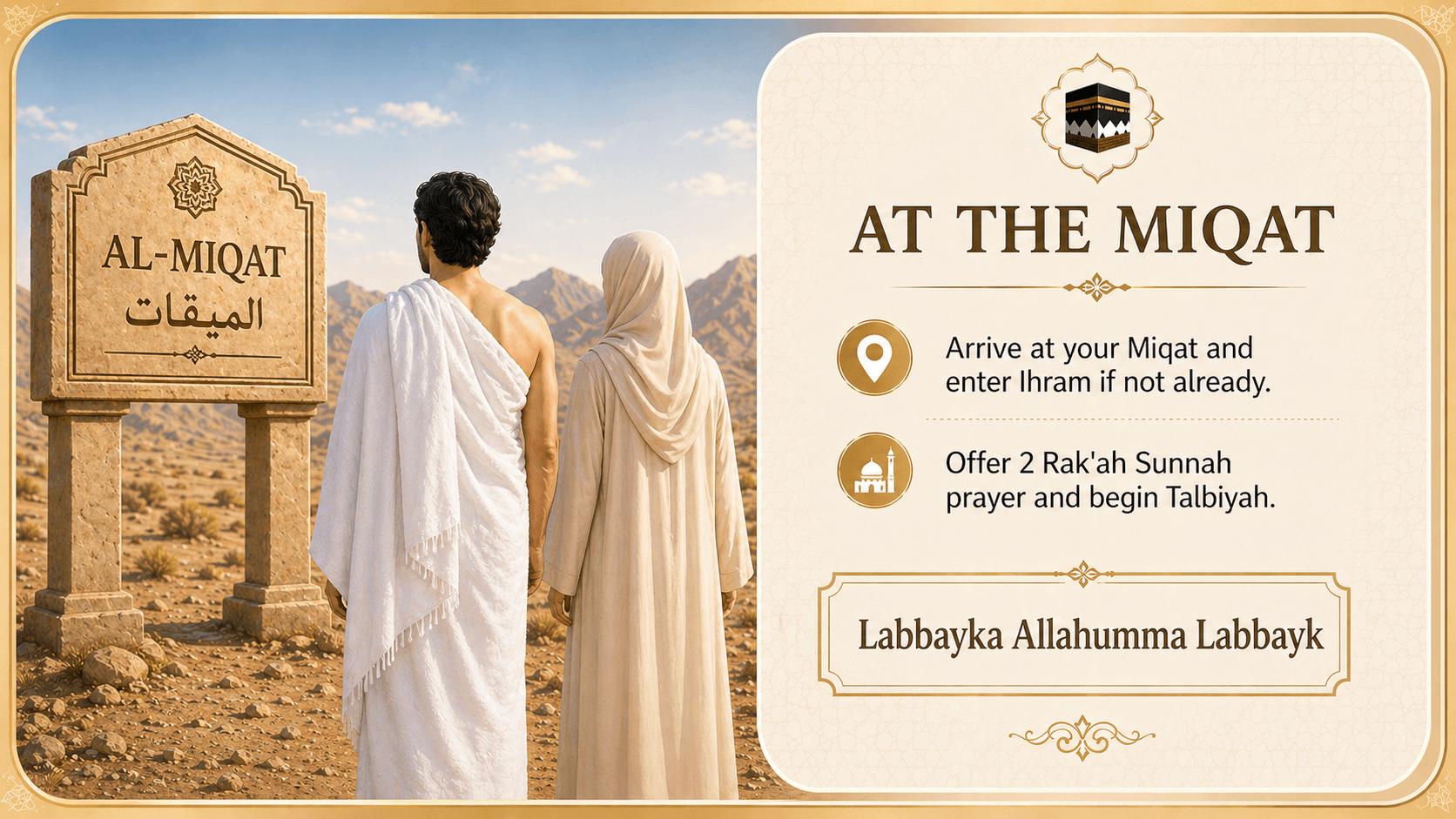
Arrive at your Miqat, enter Ihram if not already, offer two rak‘ah if possible, and begin Talbiyah.
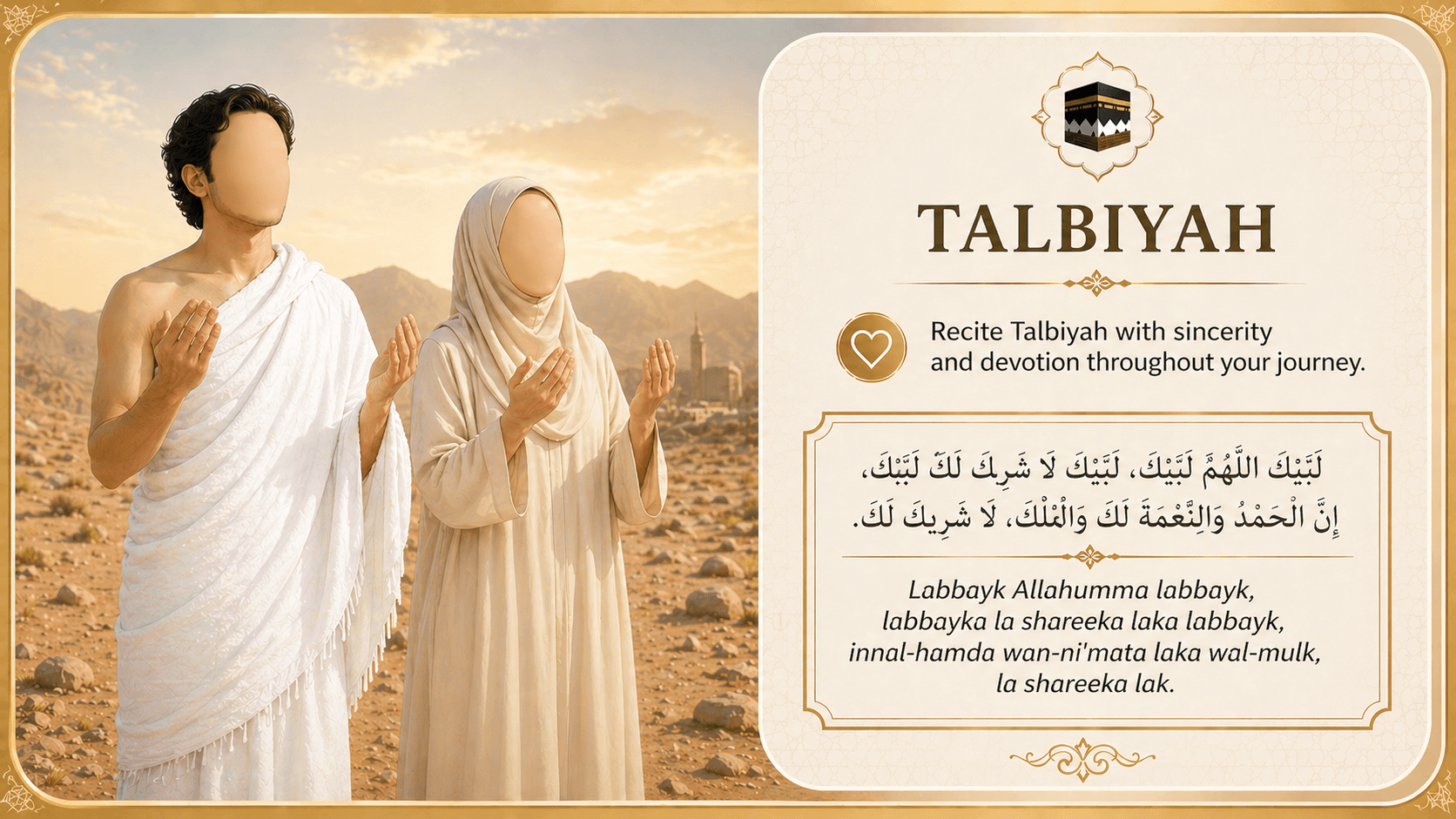
Recite Talbiyah frequently with sincerity: Labbayk Allahumma labbayk.
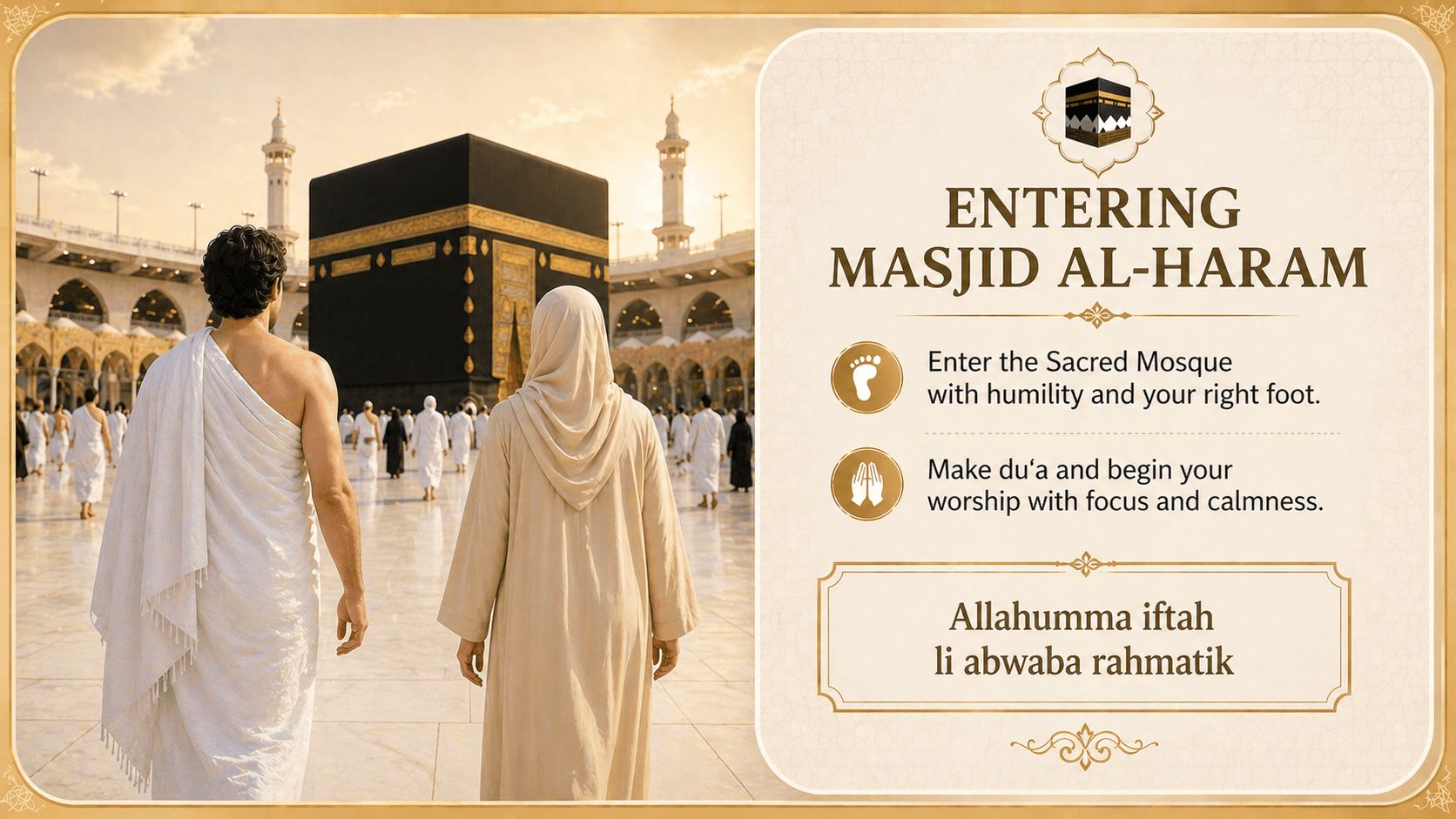
Enter the Sacred Mosque with humility, make du‘a, and begin worship with focus and calmness.
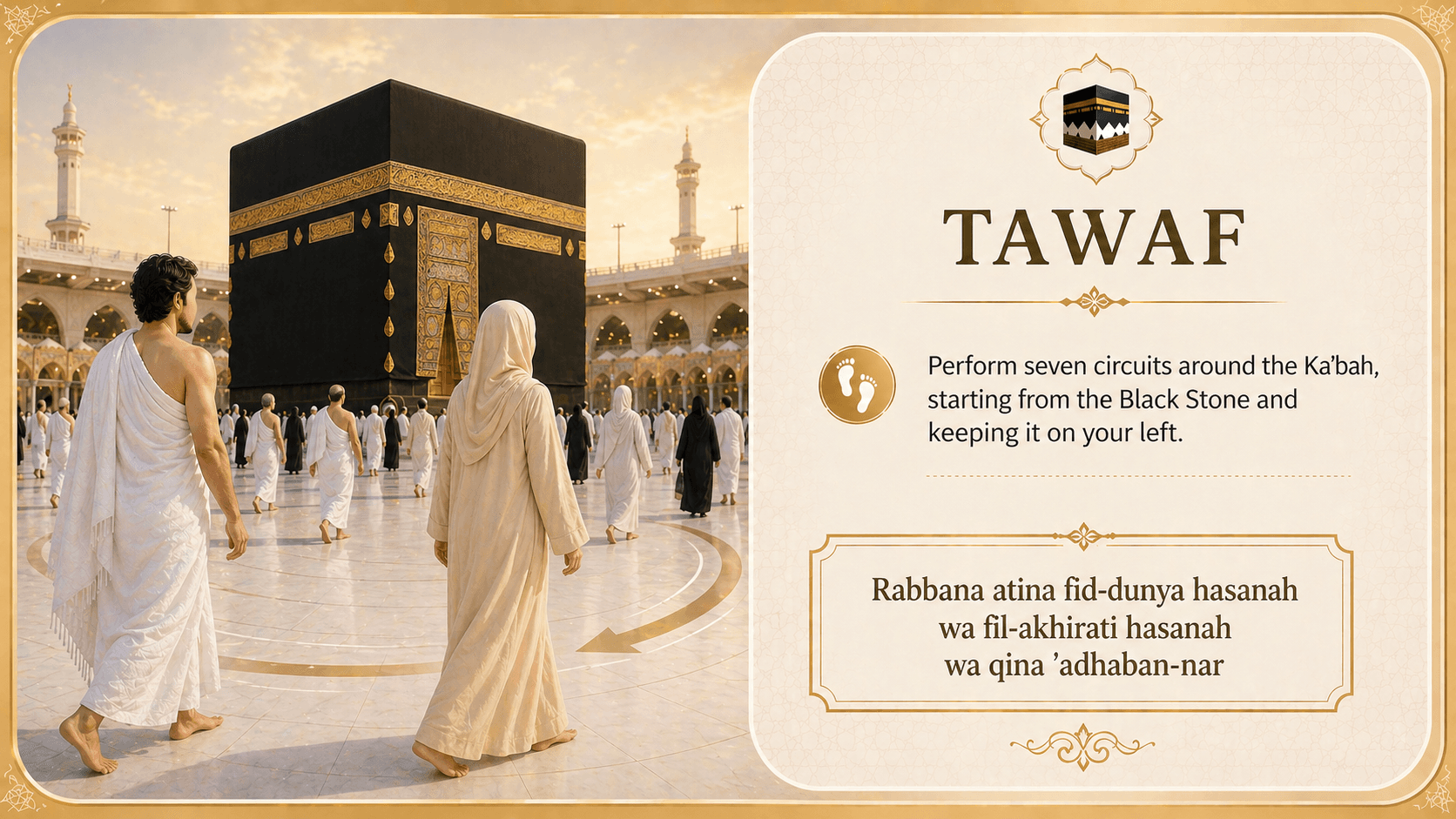
Perform seven circuits around the Ka‘bah, starting from the Black Stone and keeping the Ka‘bah on your left.
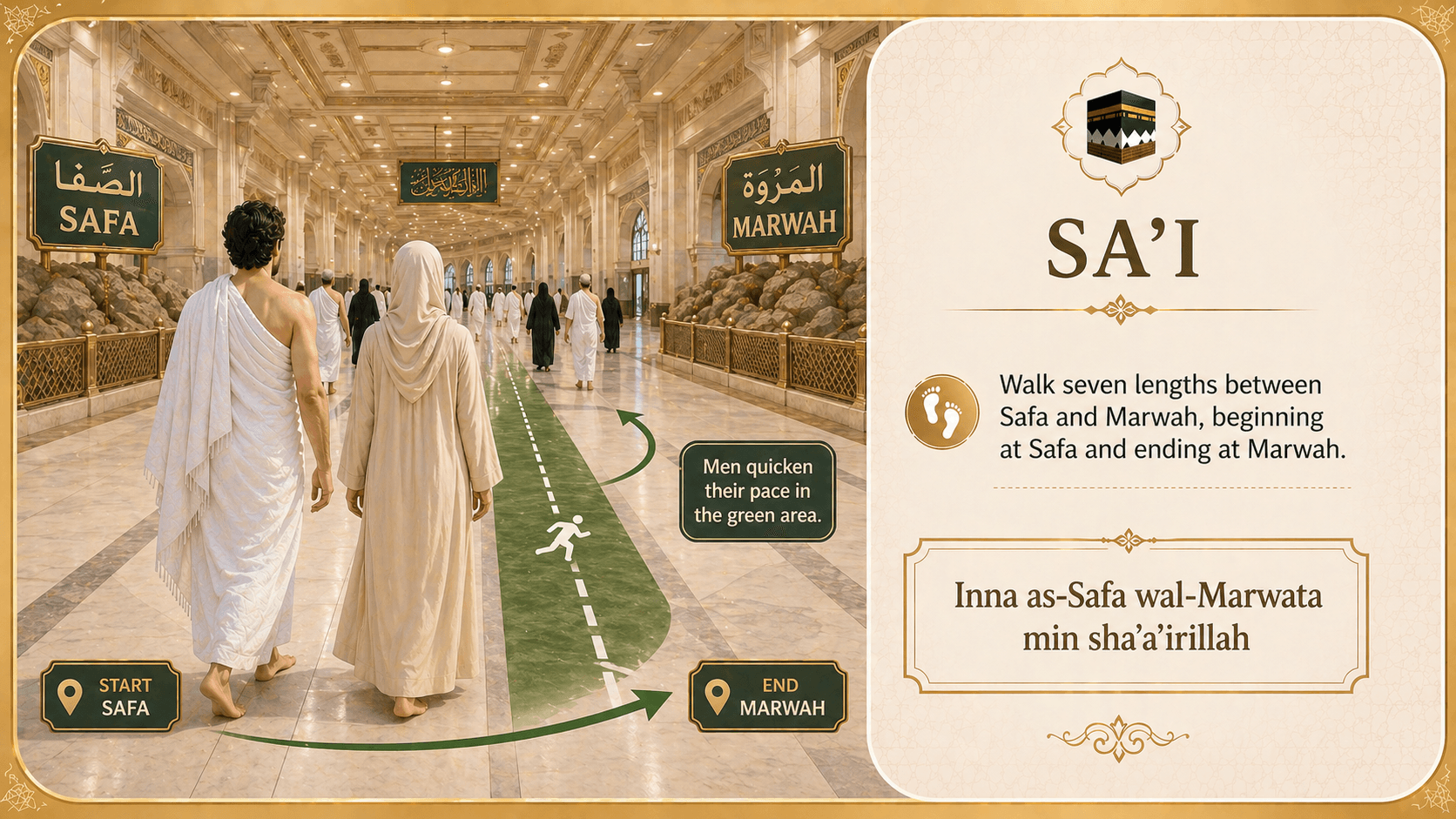
Walk seven lengths between Safa and Marwah, beginning at Safa and ending at Marwah.
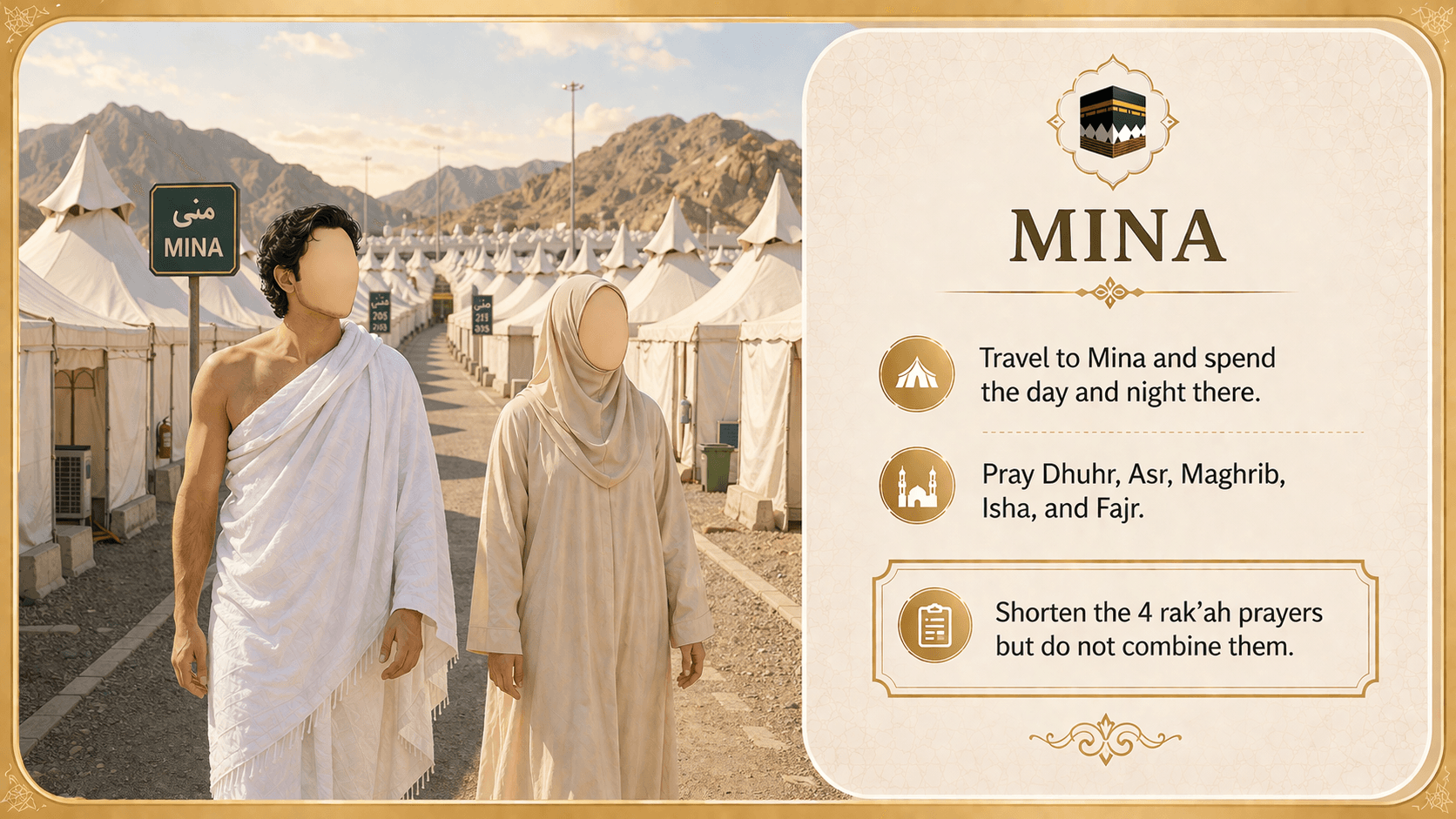
Travel to Mina and spend the day and night there, praying Dhuhr, Asr, Maghrib, Isha, and Fajr.
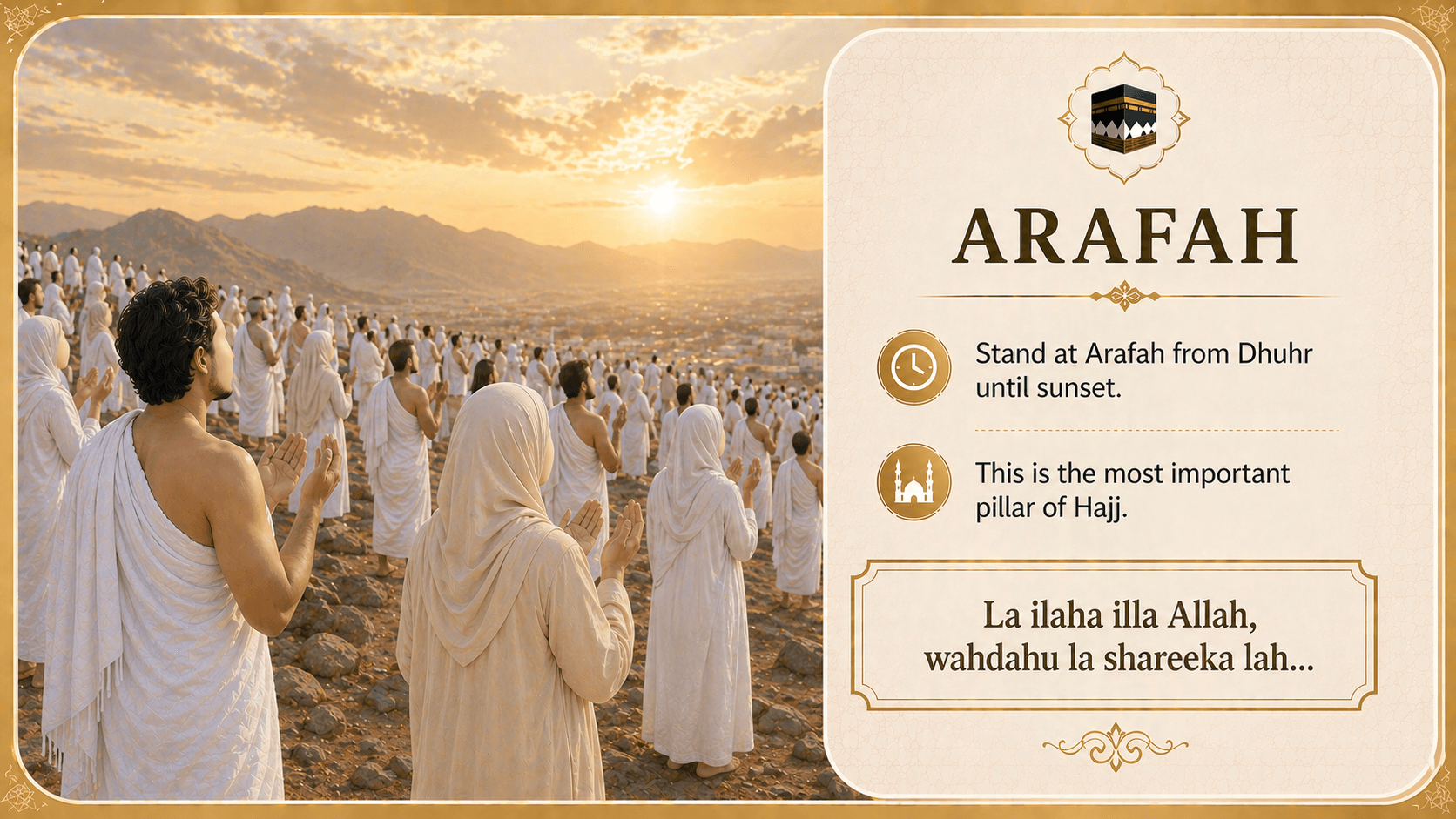
Stand at Arafah from Dhuhr until sunset. This is the most important pillar of Hajj.
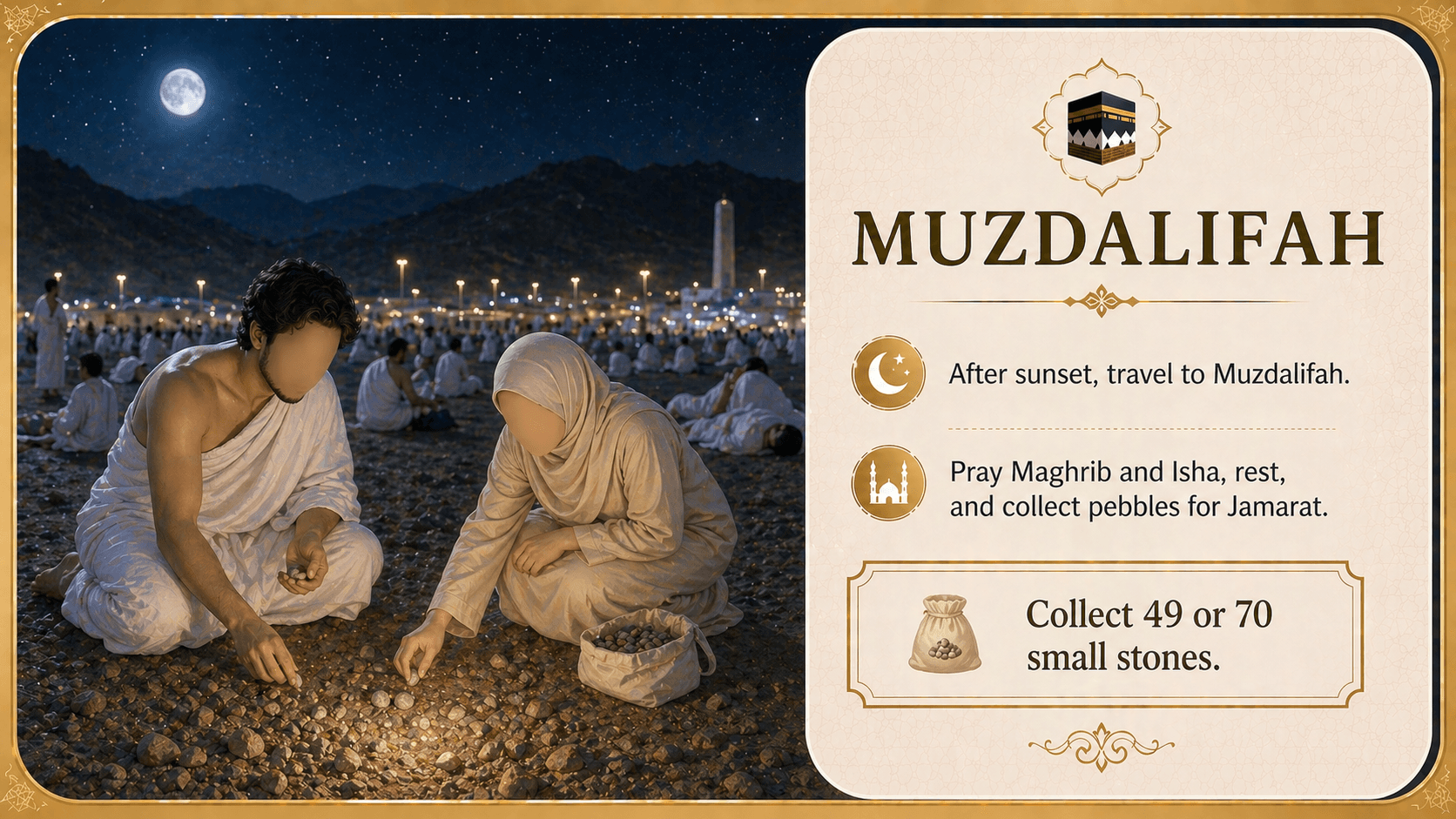
After sunset, travel to Muzdalifah, pray Maghrib and Isha, rest, and collect pebbles.
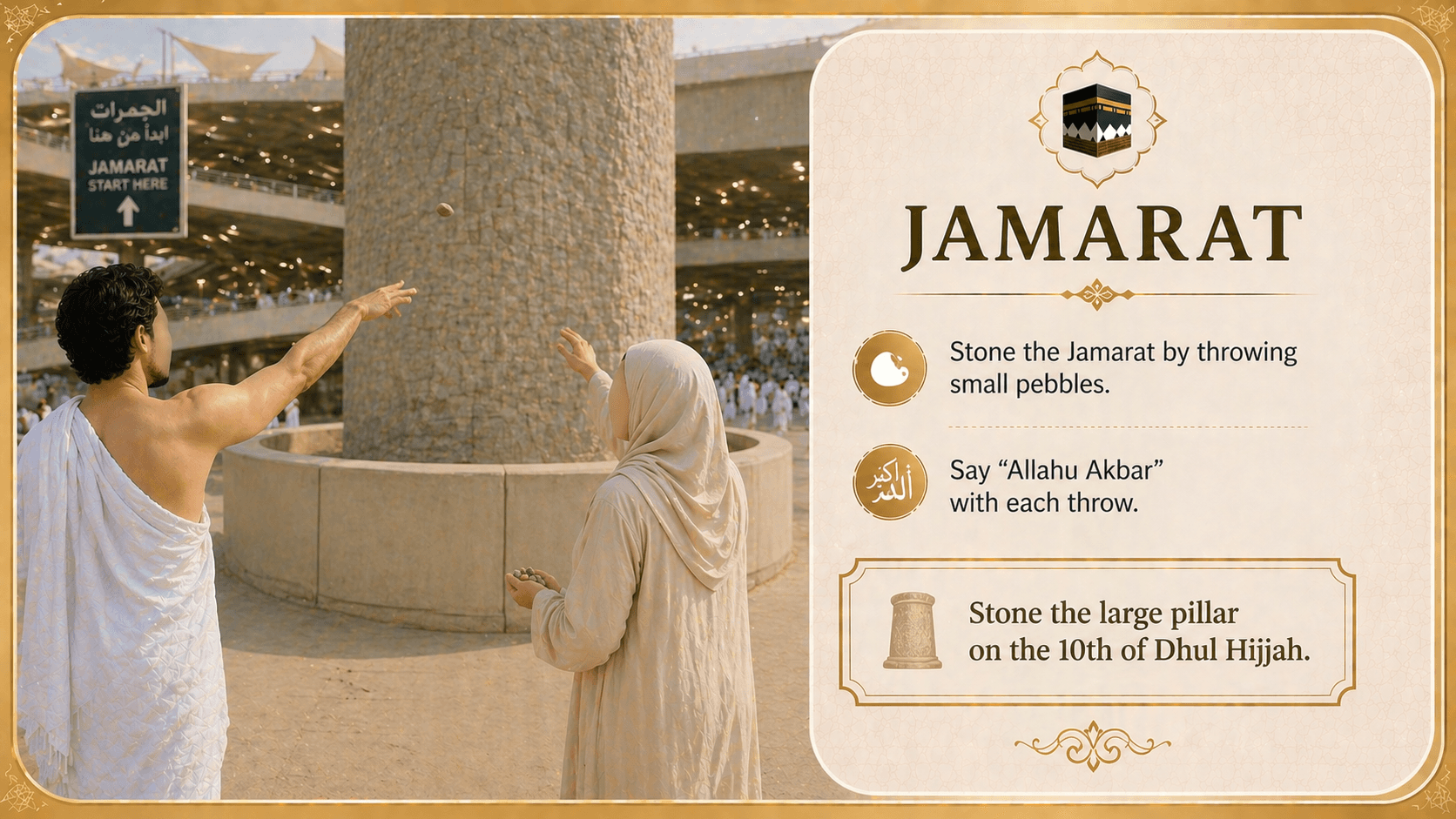
Stone the Jamarat by throwing small pebbles while saying Allahu Akbar with each throw.
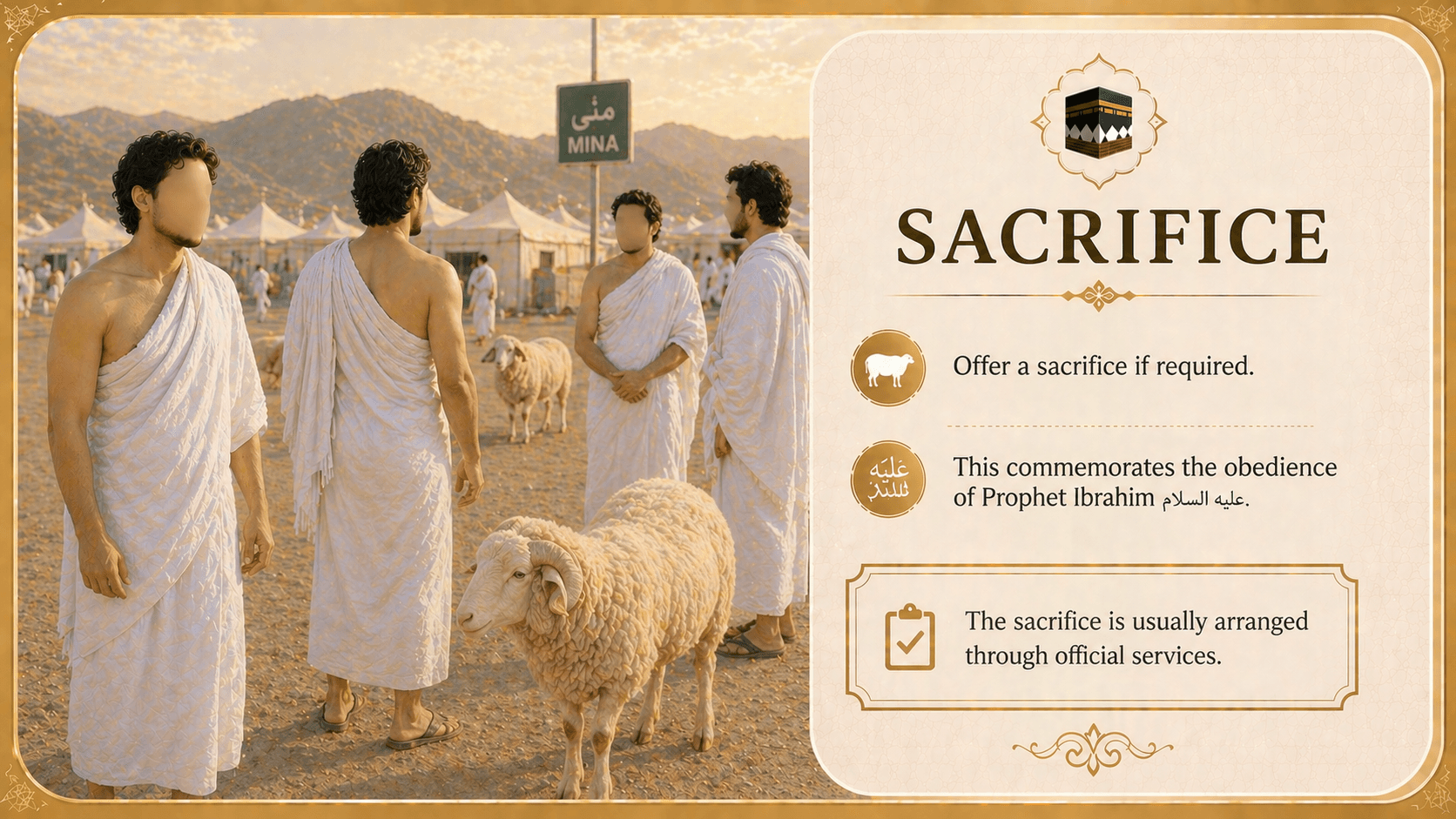
Offer a sacrifice if required, commemorating the obedience of Prophet Ibrahim عليه السلام.
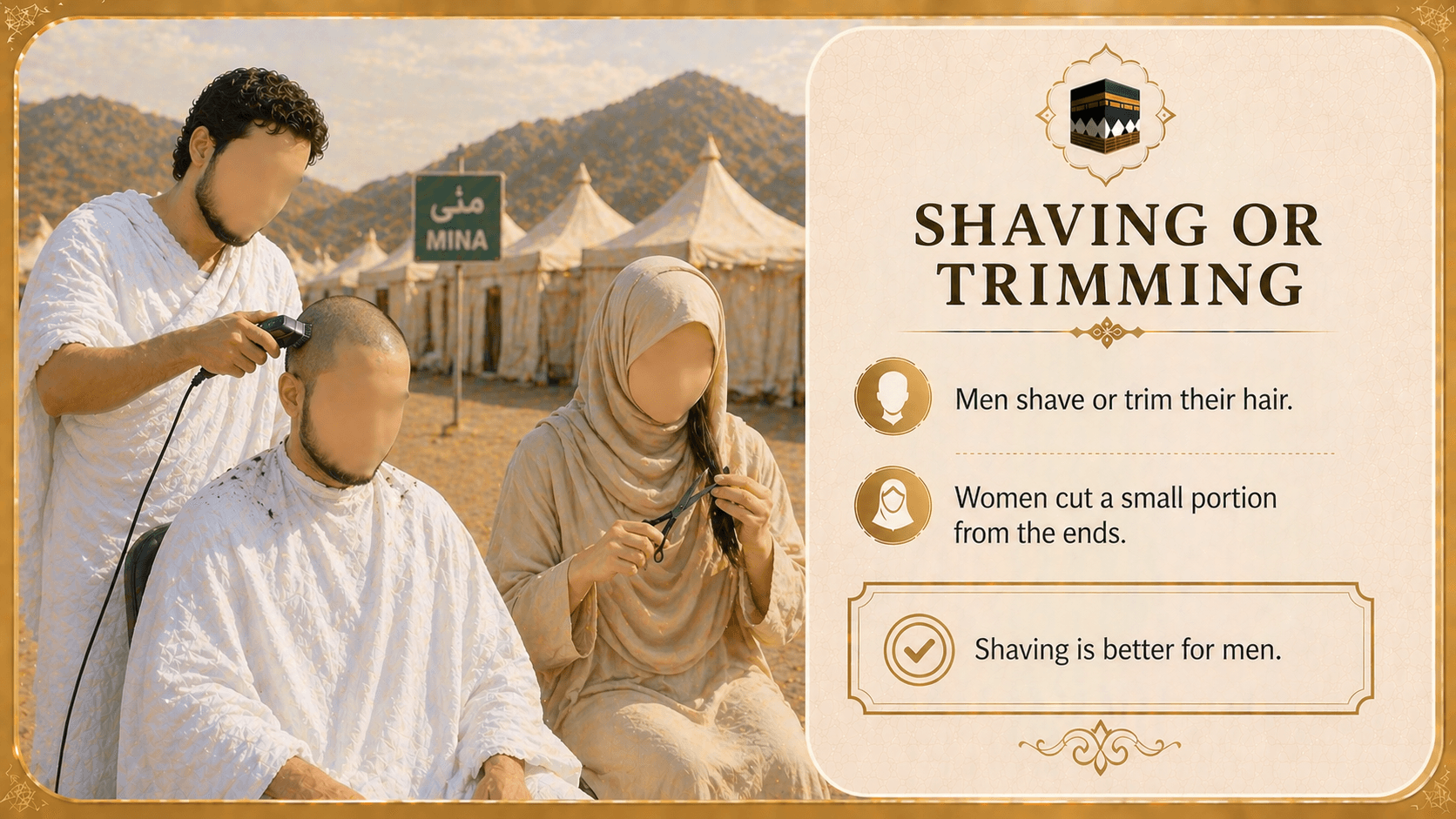
Men shave or trim their hair. Women cut a small portion from the ends of their hair.
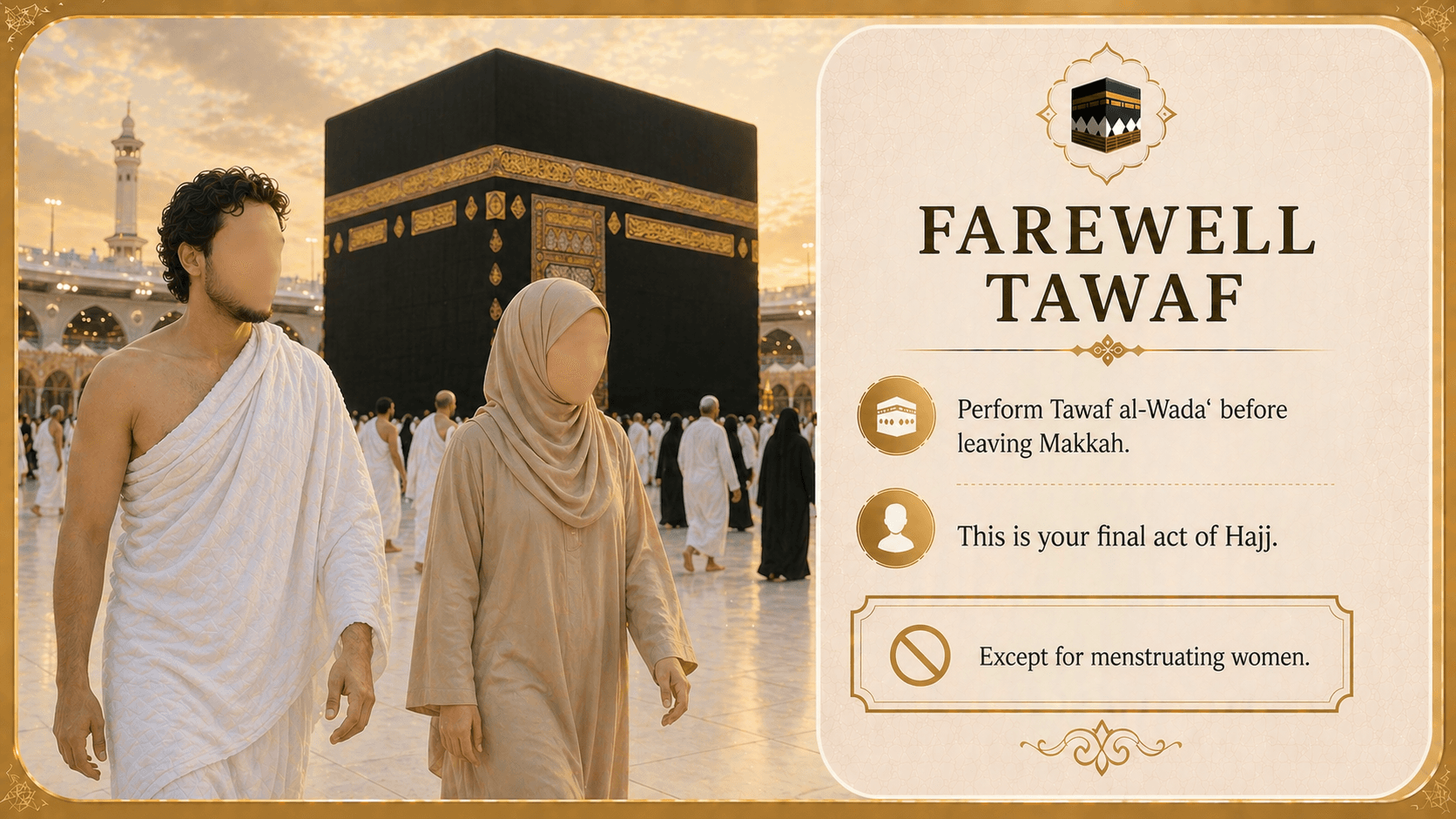
Perform Tawaf al-Wada‘ before leaving Makkah as your final act of Hajj, except for menstruating women.
Labbayk Allahumma labbayk, labbayka la shareeka laka labbayk, innal-hamda wan-ni‘mata laka wal-mulk, la shareeka lak.
Rabbana atina fid-dunya hasanah wa fil-akhirati hasanah wa qina ‘adhaban-nar.
La ilaha illa Allah wahdahu la shareeka lah, lahul-mulku wa lahul-hamd, wa huwa ‘ala kulli shay’in qadeer.